
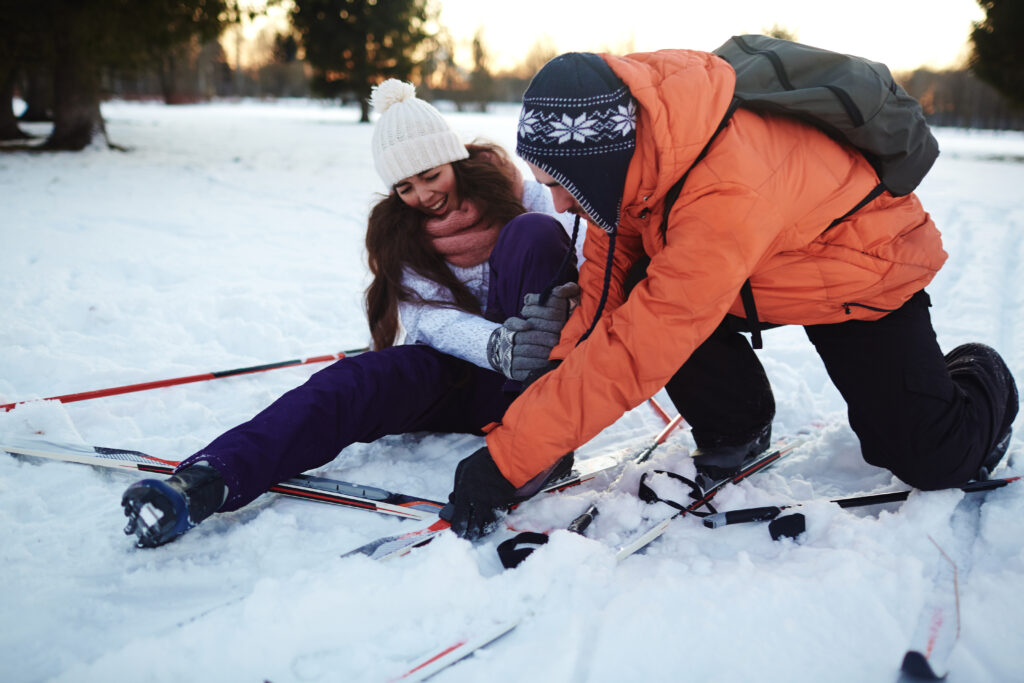
A day on the ski slopes is supposed to be fast-paced, exciting, and memorable for the right reasons. For many people, though, a ski trip takes a sharp turn after a collision with another skier. What starts as a vacation can quickly turn into emergency medical care, missed work, and months of recovery.
After a ski collision, injured skiers often ask the same question: “Who pays for this?” Medical bills add up quickly, especially when injuries involve surgery, hospital stays, or long-term rehabilitation. Many people assume the ski resort will step in or that there is no clear path forward if another skier caused the crash.
In reality, skier-on-skier collisions often involve insurance coverage that most people do not expect. In many situations, the skier who caused the collision may be covered under their homeowners or renters insurance policy, even though the accident happened far from home.
At Falcon Law Group, we represent individuals who suffer serious injuries in complex liability cases, including ski collision claims. By identifying insurance coverage that others miss, our team has recovered millions in compensation for injured clients who were initially told they had no options.
When Ski Collisions Go Beyond the Risks of the Sport
Skiing comes with natural risks. Uneven terrain, changing weather, and variable snow conditions are all part of the experience. Skiers are expected to follow basic safety standards, often referred to as skier responsibility rules. These guidelines require skiers to stay in control, watch for others downhill, and avoid skiing in areas beyond their skill level. When a skier ignores those responsibilities and causes a collision, the situation may involve legal fault rather than an unavoidable mishap.
Common examples of ski collision scenarios include:
- Downhill skiers being hit from behind
- Collisions caused by excessive speed in crowded areas
- Crashes near lift loading or unloading zones
- Loss of control on terrain the skier could not handle.
These incidents frequently lead to injuries such as broken bones, head injuries, spinal damage, and lasting physical limitations.
How Homeowners Insurance Can Apply to Ski Accidents
Many people are surprised to learn that homeowners and renters insurance policies often include personal liability coverage. This portion of the policy is meant to protect the insured if they are accused of causing bodily injury to another person.
What matters most is that personal liability coverage often applies anywhere in the world, not just at the insured’s home. That means a ski collision in Colorado, Utah, or another state may still fall under a policy issued back home.
In a ski collision claim, homeowners or renters insurance may provide coverage for injuries caused by the at-fault skier, along with a legal defense if a claim is made against them. The coverage typically applies when the injured person can show that the skier acted carelessly or failed to follow basic safety rules.
What Types of Insurance Policies May Be Involved
Several different insurance policies may come into play after a ski collision, depending on what the at-fault skier carries and the severity of the injuries. These policies can include:
- Homeowners insurance with personal liability coverage
- Renters insurance with personal liability protection
- Umbrella insurance policies that add higher liability limits
Umbrella policies are especially important in serious injury cases. Ski collisions can result in high medical costs, extended time away from work, and long-term care needs. Umbrella coverage often provides the additional financial support needed when standard policy limits are not enough.
Why Ski Resorts Are Not Always the Answer
Many injured skiers assume that the resort is responsible for what happened on the mountain. In some cases, that may be true. More often, though, ski resorts are protected by liability waivers, assumption-of-risk laws, and aggressive defense strategies.
Because of these protections, claims against resorts can be difficult and fact-specific. As a result, many valid injury cases instead focus on skier-on-skier liability. When another skier’s actions caused the crash, their personal insurance coverage may be the most realistic path to compensation.
This approach often catches injured skiers off guard. After an accident, people exchange names quickly, ski patrol clears the area, and everyone moves on. The presence of an insurance policy is rarely discussed at the scene, even though it may exist in the background.
What Injured Skiers Can Recover Through an Insurance Claim
When homeowners, renters, or umbrella insurance applies, an injured skier may be able to pursue compensation for a wide range of losses. These claims are meant to address both immediate and long-term impacts of the injury.
Recoverable damages may include:
- Medical treatment
- Rehabilitation costs
- Lost income
- Reduced earning capacity
In more serious cases, compensation may also account for ongoing care needs and permanent limitations that affect daily life.
Insurance companies often look for reasons to limit or deny these claims, especially when the injured person lives in a different state than where the accident happened. That is why early evaluation and proper handling of the claim matter so much.
Why Evidence Makes or Breaks Ski Collision Claims
Ski collision cases rely heavily on evidence gathered early on. Unlike car accidents, there may not be police reports or formal investigations unless someone pushes for documentation right away.
Key evidence can include ski patrol reports, witness names and contact information, photos of the scene, trail conditions, and any available video footage. Helmet cameras, lift cameras, and cell phone recordings can also play a role.
Once injured skiers return home, especially if they live far from the resort, the window to gather this information can close quickly. Meanwhile, insurance companies may start forming opinions about coverage and liability long before the injured person understands their position.
How Falcon Law Group Handles Ski Collision Cases
At Falcon Law Group, we focus on identifying all available insurance coverage and building strong claims for clients with serious injuries. Our team understands how skier-on-skier liability works and how homeowners, renters, and umbrella policies apply in real-world situations.
We routinely handle cases involving complex liability issues and significant damages. When insurers assume an injured skier will walk away or accept less than what the claim supports, we step in and push back.
Our firm works with clients injured on ski trips across the country, including popular destinations in Utah and Colorado. Even when the accident happens far from Texas, we know how to pursue accountability and protect our clients’ interests from start to finish.
Taking the Next Step After a Ski Collision Injury
If you or a family member were hurt in a ski collision caused by another skier, do not assume there is no way forward. Homeowners, renters, or umbrella insurance coverage may exist, even if no one mentioned it at the time of the accident.
The experienced team at Falcon Law Group can review the facts of your case, evaluate available insurance coverage, and explain your options clearly. We take the time to understand what happened and what recovery may be possible.
Contact Falcon Law Group today for a free, confidential consultation. We are ready to help you determine whether insurance coverage applies and what steps make sense for your situation.